

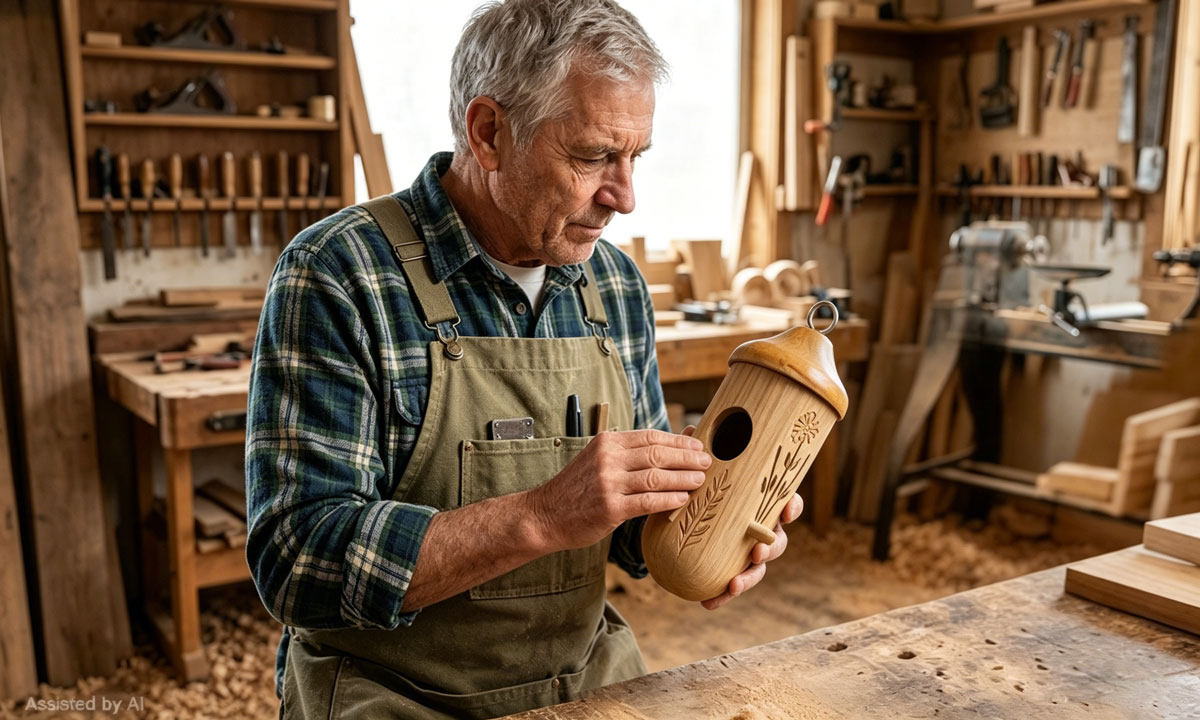
In a small workshop outside Asheville, Henry Bennett is finishing what he says will be the last boxes he ever makes. He is 78.
The room has not changed much in decades — roughly sixteen feet by twenty-three, tools along the walls, saws and planes and chisels, some of them older than his career. A wood stove in the corner does the winter. On the bench sit solid panels, half-assembled boxes and roof sections cut and waiting.
He still works every day. Just slower.
After forty-eight years he has decided to stop. When you ask him why, though, he does not talk about his age or his hands.
“It's the quiet. That's the part that bothers me.”
Henry BennettA change that happens slowly enough to miss
What Henry means is something he has watched over a long stretch of years: there are fewer birds around the workshop than there used to be. Not none. Noticeably fewer.
“Twenty years ago, when I opened up in the morning, they were already there. Now some mornings there's nothing.”
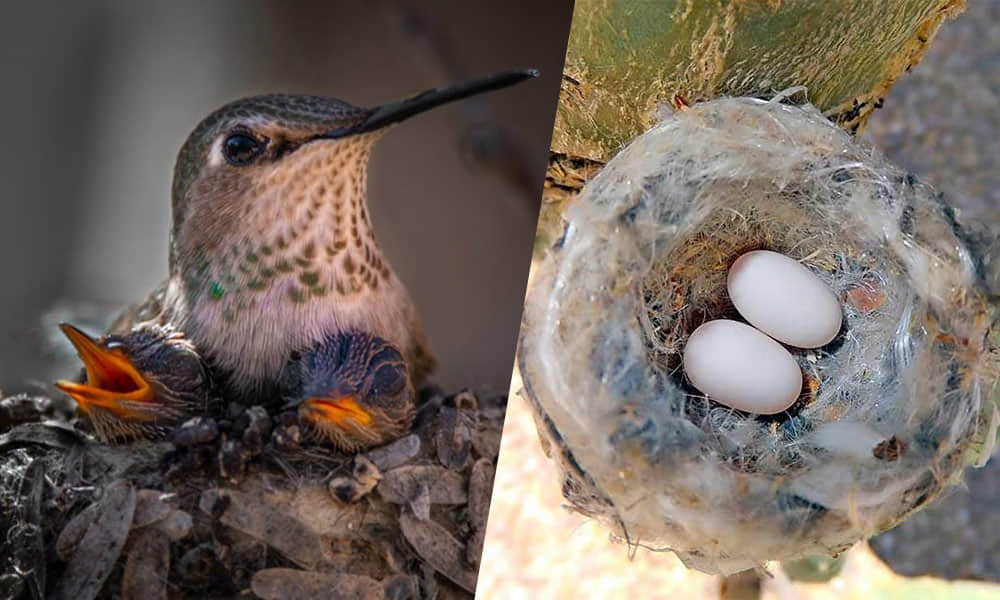
It is not unique to his corner of North Carolina, and the reasons are not complicated. Old trees with natural cavities come down. Gardens get tidier — fewer scrappy corners, fewer dead limbs left standing. New buildings are sealed in ways old ones were not, so the gaps under eaves that a wren might have used simply are not there.
For any species that depends on a small protected space to raise a brood, a lot of small changes add up to one large one.
“Most of them are not built for birds”
What frustrates Henry is not only the decline. It is what he sees people buy in response to it.
“Most birdhouses today are designed to look good,” he says. “Not to work.” After four decades of building them and then going out to see which ones got used, he has stopped being polite about it.
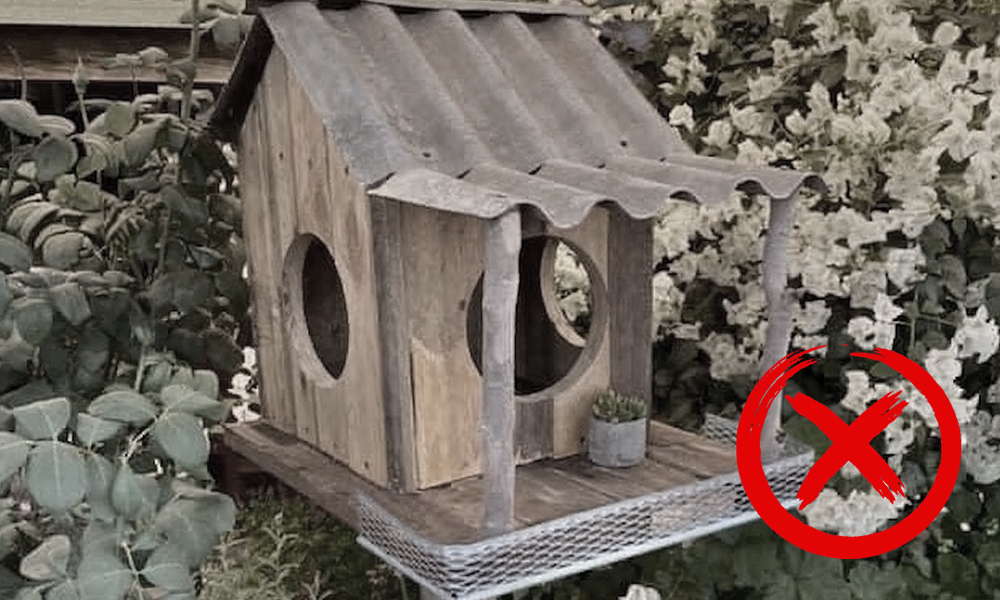
The entrance hole is too big
Hole size is the single most important dimension on a nest box, and the one most often got wrong. Too large and house sparrows or starlings take it over, and larger predators can reach inside. Different species need different diameters — a generic hole suits nobody in particular.
The wood is treated
Painted and varnished boxes look right in a garden centre. Birds are extremely sensitive to smell, and fresh chemical finishes put them off — particularly inside, where the fumes have nowhere to go.
The walls are too thin
“Thin walls are a tent,” Henry says. Cold nights pull heat straight out of the box; an afternoon of direct sun turns it into an oven. Solid stock is heavier and costlier to ship, which is exactly why mass-produced boxes do not use it.
There is no way to open it
A nest box has to be cleaned out after the season, because old nesting material carries mites and parasites into the next year. A box glued shut cannot be maintained, so it gets used once and then quietly abandoned.
“People mean well,” he says. “They just haven't been told what matters. Nobody ever sat down and explained it.”
How he worked it out
Henry never simply built birdhouses. He built them and then went and looked.
“I started with small boxes. Simple things. Then I watched — which ones got taken, which got ignored. Why would a bird move into box A and never once look at box B hanging six feet away?”
That turned into a long experiment in the woods behind the workshop and in half the gardens on his road. He changed one variable at a time: hole diameter, wall thickness, the height it hung at, which way it faced. He asked ornithologists. He read what he could find.
From the notebook
He keeps it in a drawer — yellowed, handwritten, dates and places and a line on whether the box was occupied that season.
“This one went up in 2001. A neighbour hung it on an oak outside the house.” He pauses. “It's still there.”
Further on: Klaus family, Burlington — three boxes, 2008. He traces the line with a finger. “Last year their daughter wrote to me. All three still in use.”
He closes the notebook without adding anything.
What ended up in the design
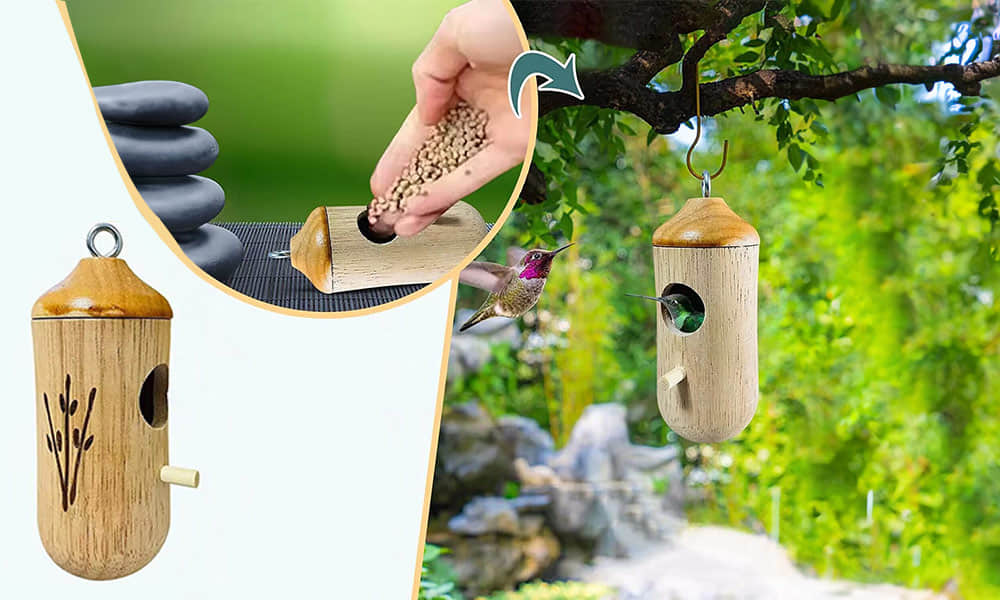
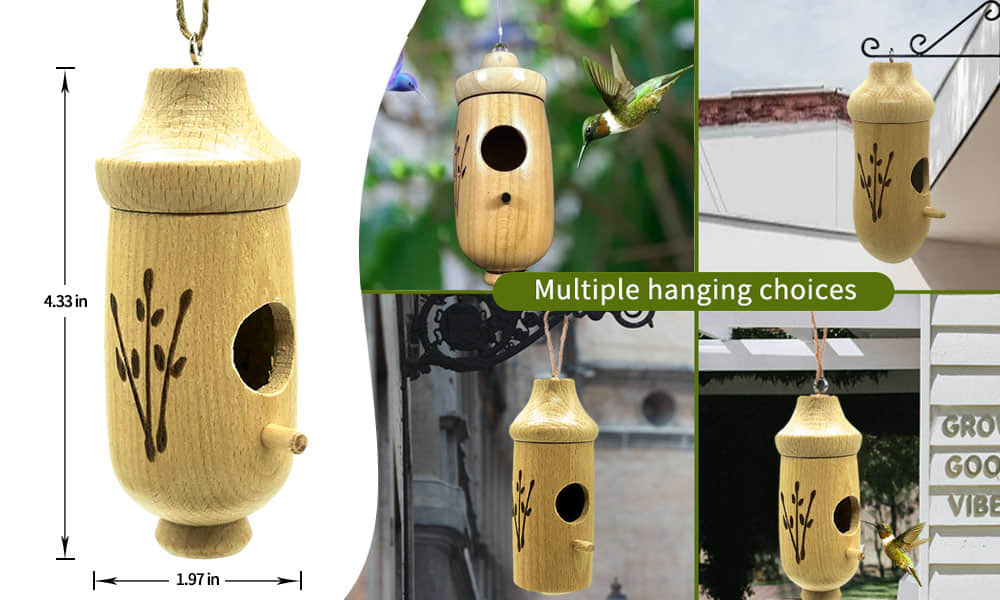
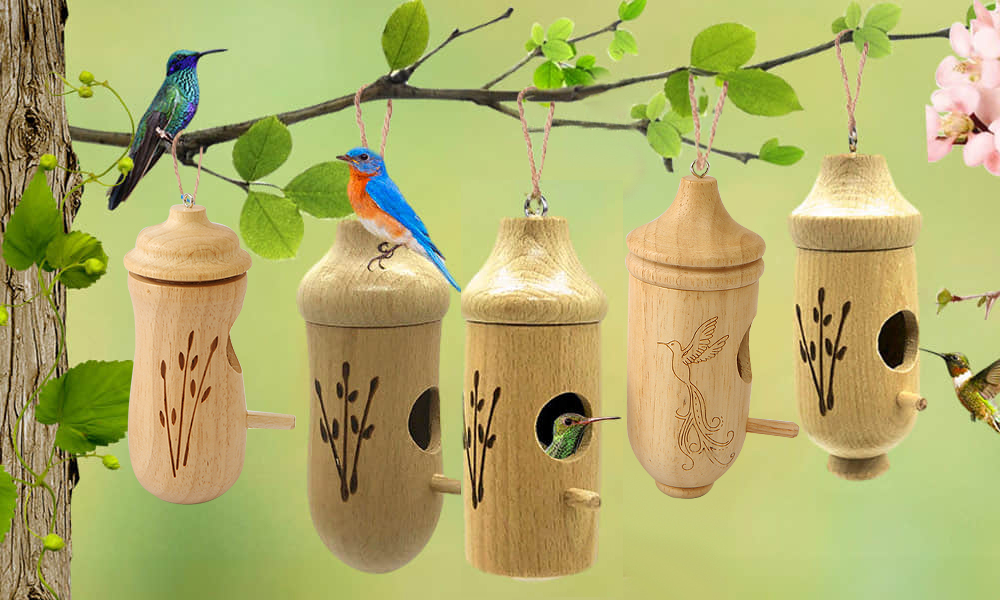
The box he settled on is deliberately plain. Untreated solid wood, no paint and no varnish, so there is nothing to smell and nothing to flake into a nest. A small, precisely sized entrance. A roof with enough overhang to keep rain off the hole and shade it in the afternoon. A sturdy loop so it can be hung on a branch, a hook or a beam without improvising.
Sized entrance. Small enough to keep larger competitors and predators out of the interior.
Untreated solid wood. No paint, no varnish, no chemical smell in an enclosed space.
Overhanging roof. Keeps rain off the entrance and shades it through the afternoon.
Carved leaf detailing. Cut into the face so the box reads as part of the garden rather than an object in it.
Rust-resistant hanging loop. Fixed properly at the top, so hanging it does not become a project.
Final batch. What is on the shelves now is the last run before the workshop closes.
One thing worth being straight about
These boxes are often sold as “hummingbird houses”, and we would rather not repeat that. Hummingbirds do not nest in enclosed boxes. They build tiny open cup nests, bound with spider silk, on a thin branch or fork — they are not cavity nesters, and no birdhouse will change that.
What a small box like this does suit is the cavity nesters that have lost the old trees and gaps they used to rely on: wrens, chickadees, titmice and, depending where you are, nuthatches. Those are the birds worth hanging it for. It also gets used as a winter roost, which is a quieter payoff but a real one.
If you want to bring hummingbirds into the garden specifically, the answer is nectar plants and a clean feeder, not a house.
Why he is selling the last of them cheaply
Henry plans to close the workshop in the summer of 2026. He says it plainly. “My hands can't keep up.” He flexes his fingers while he says it — steady enough, visibly stiff. Decades of carving and sanding and fine adjustment have taken the precision out of the small work first, which is exactly the work that matters on a box like this.
There is no apprentice. His son is an engineer in New York; the grandchildren are still at school. “Nobody wants to do this kind of work any more,” he says, with a small smile. “Especially not birdhouses.”
So he decided to put the last of them out at a reduced price rather than sit on them.
“I'd rather they hang somewhere they're needed, with people who understand why it matters. They aren't decorations for a balcony.”
Henry BennettHis granddaughter Mary, who is 24, put the remaining boxes online for him — set up the listings, wrote the descriptions, answered the first messages. “She told me people are still looking for these,” he says. “They just don't know where to find them.”
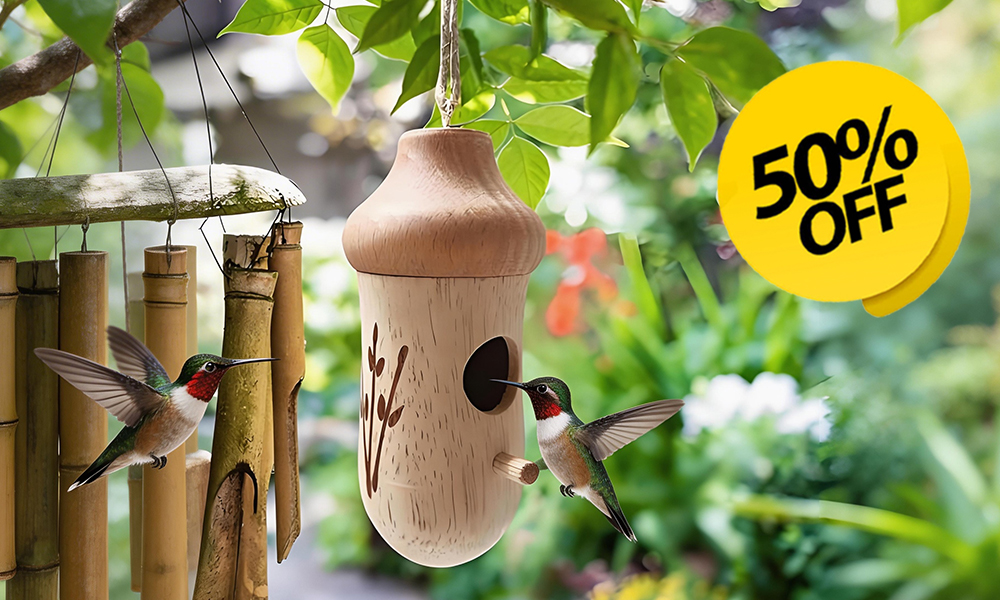
The Binrem wooden nest box
Untreated solid wood, a sized entrance, an overhanging roof and carved leaf detailing. Roughly 4.33 × 1.97 inches — a small box for small cavity nesters.
Price, discount, stock and shipping terms are set by the seller and can change at any time without notice to us. A further reduction applies on two. Confirm the current figure at checkout before paying.
See the offerWhat buyers say
Reviews published by the seller and reproduced here. We have not independently verified them, and individual experience varies with location, season and placement.

“I hung it in October and had wrens using it by March. There is birdsong outside the bedroom window in the mornings again, which there had not been for years.”
✓ Verified purchase
“We had two hardware-store boxes in the garden for years and never a single bird in either. This one got taken the first spring. You can see the difference in how it is put together.”
✓ Verified purchase
“My father was a carpenter and he would have picked this up and turned it over. The wood, the joins, the proportions — it is properly made, which is rarer than it should be.”
✓ Verified purchase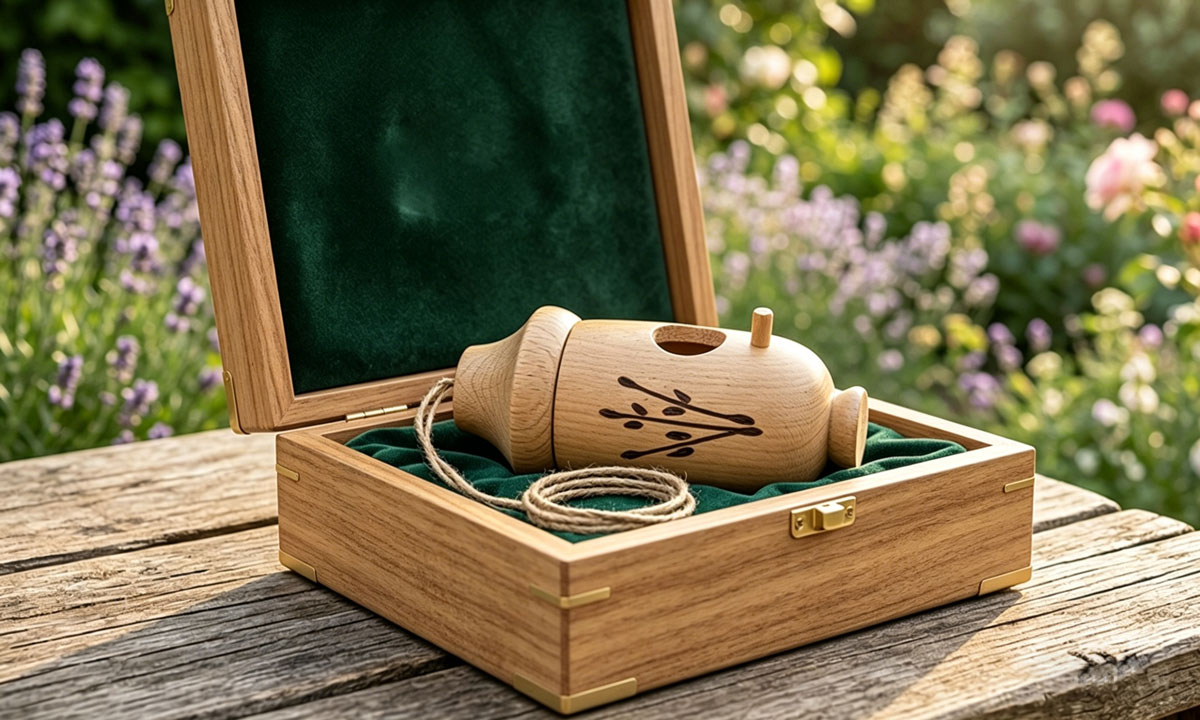
It makes a better gift than most garden objects do, largely because it is not only an object — it is a thing that might result in something happening outside a window. Gardeners, grandparents wanting to show a grandchild a nest, anyone whose garden has gone quiet.
Before you hang one
Which birds will actually use it?
Small cavity nesters — wrens and chickadees most commonly, titmice, and nuthatches in some regions. Not hummingbirds, despite how these boxes are often marketed: hummingbirds build open cup nests on branches and never use an enclosed box. Which species you get depends far more on where you live and what is nesting nearby than on the box itself.
Where should I hang it?
Somewhere quiet and sheltered, five to ten feet up, out of the harshest afternoon sun and away from driving rain. Give it a clear flight path to the entrance, and avoid a branch immediately below the hole that a cat or squirrel could work from. Facing away from the prevailing wind is worth the trouble.
When should I put it up?
Late winter or very early spring, before birds start looking for sites. Autumn is also fine — an empty box gets used as a winter roost on cold nights, which is a good reason not to leave it in a cupboard until March.
How do I clean it?
Once the brood has fledged and the box is definitely empty, take out the old nest material and brush the inside. Old nests carry mites and parasites into the following season. Wear gloves. Check local guidance on timing, since disturbing an active nest is restricted in many places.
How big is it?
The seller lists roughly 4.33 × 1.97 inches. That is small — a decorative box suited to the smallest cavity nesters rather than a full-size nesting box. Worth measuring against what actually visits your garden before ordering.
Who publishes this page?
Fancy Wooden House Inc., in Portland, Oregon. This is a paid advertorial and we earn a commission if you order through the link. We do not make or ship the product, and we cannot help with orders. Our Advertising Disclaimer sets it out in full.
The last batch out of a workshop closing after forty-eight years
Current pricing, the first-order discount, shipping and return terms are all published on the seller's own site — which is the page to read before deciding, not this one.
See the offerThis page is a paid advertorial published by fancywoodenhouse.com. It is promotional content rather than independent journalism. Product links are affiliate links and we may be compensated on purchases made through them. See our Advertising Disclaimer and Privacy Policy.
About this article
This is a paid promotional feature written in an editorial style. The account of the workshop, the notebook and the people in it is supplied by the advertiser; we have not independently verified the events, dates or photographs. Customer reviews are reproduced from the seller's own listing and are not typical.
Whether any bird uses a nest box depends on your location, the species present, the time of year, where the box is hung and what else is available nearby. No outcome is promised or guaranteed, and no one can tell you a bird will move in.
Wildlife note
Disturbing an active nest is restricted by law in many countries, including under the Migratory Bird Treaty Act in the United States. Clean a box only when it is empty and outside the breeding season, and check your local guidance if you are unsure. If you find an injured bird, contact a licensed wildlife rehabilitator rather than intervening yourself.